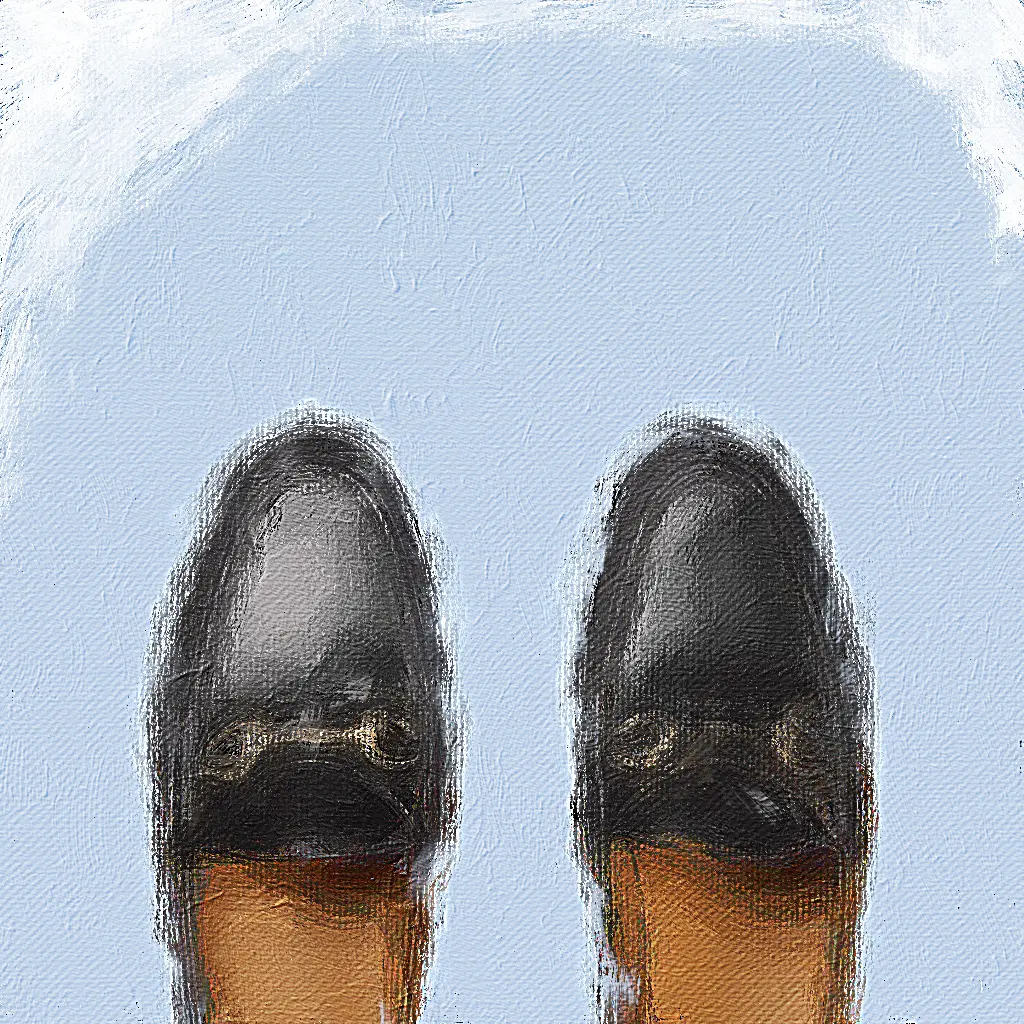
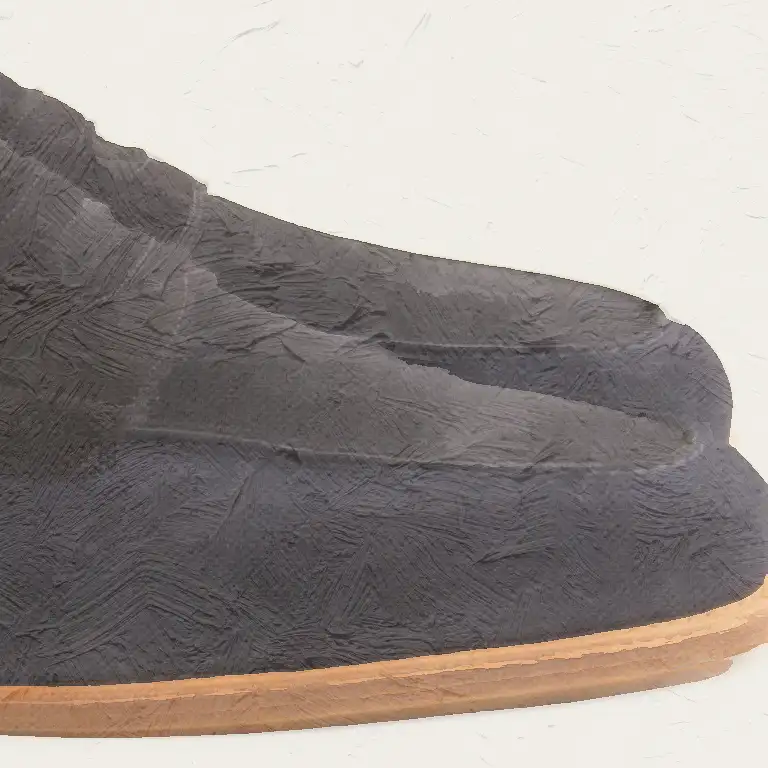
A heel joined continuously to the sole beneath the middle or front of a shoe.
A wedge is a heel with no gap beneath the arch. The Bata Shoe Museum describes wedges as shoes where the space between the heel and the sole is filled in. It notes that Salvatore Ferragamo is widely credited with inventing the wedge and that cork allowed high, supportive, light and comfortable shoes; the V&A holds a Ferragamo sandal of 1947 whose wedge heel is cork covered with strips of colored suede. Other materials serve too: the V&A also holds a Biba espadrille of about 1970 on a plaited rope wedge, and Christian Louboutin lists a 60 mm wedge heel on its Pyraclou sandal.
A wedge raises the heel; a platform thickens the sole under the forefoot. The two can be combined: the Museum at FIT holds shoes by Roger Vivier from 1944 to 1945 with a platform wedge in alternating layers of kid and suede.
In job listings
Wedge heel rarely appears in a job title. Wedges are developed by footwear product development teams, who coordinate prototypes, samples and component suppliers, and made in shoe production roles, from upper assemblers to prototype shoe assemblers who last and finish samples. See current footwear development roles.