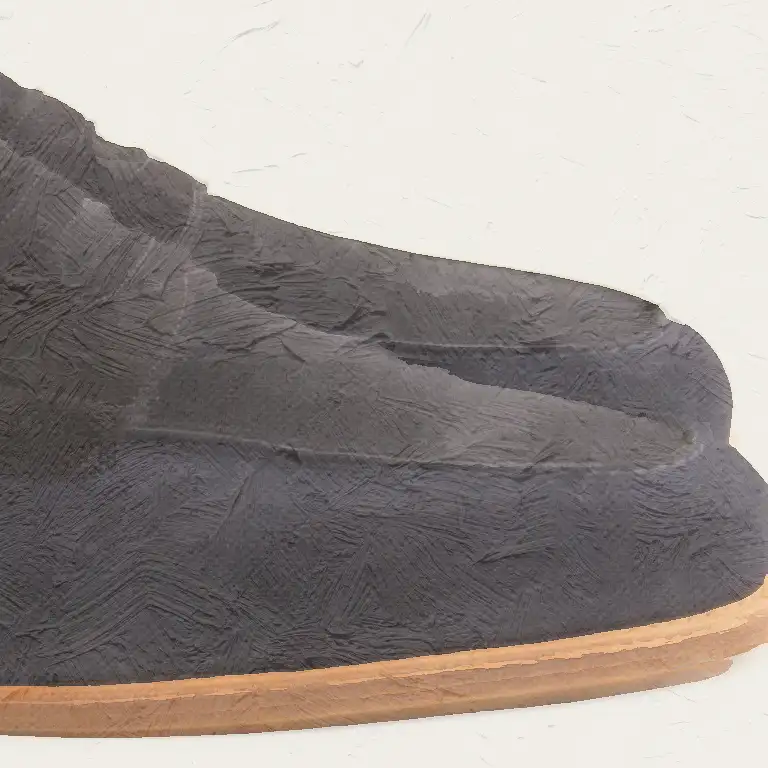
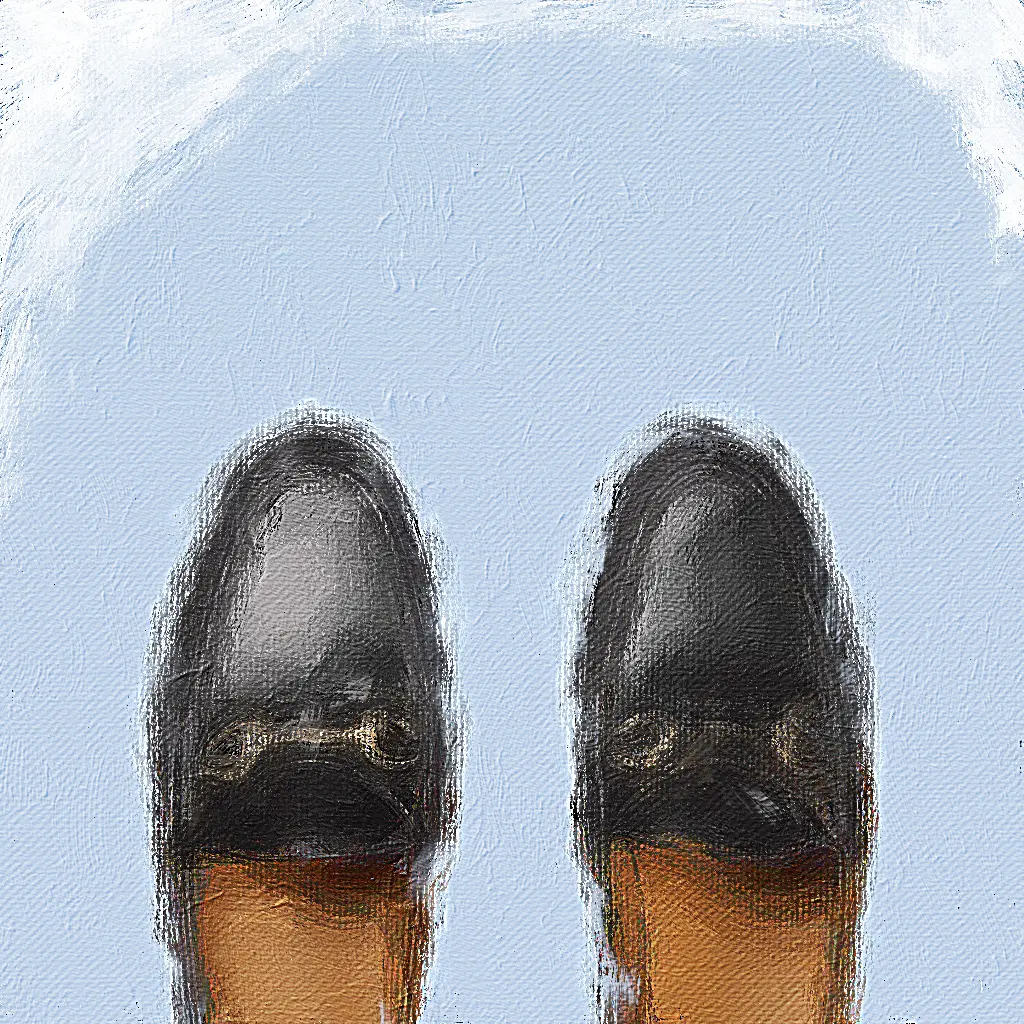
A lace-up shoe with a contrasting, saddle-shaped panel across the middle of its upper.
The saddle is a separate piece of leather laid over the waist of the shoe, across the middle of the upper. The Met describes the saddle shoe as distinguished by this piece, often in a contrasting color, forming the lacing tabs, and The Henry Ford describes saddle shoes as lace-up shoes with a contrasting band of colored leather. The contrast is usual but not required: the Met’s own example is all black. According to the Met, A. G. Spalding introduced the style in 1906 as a gym oxford, with the saddle reinforcing the instep.
The neighbor to keep apart is the spectator, which is also two-toned. On a spectator the contrast follows the toe and heel pieces; on a saddle shoe it sits in the middle. Crockett & Jones uses the word differently for loafers: its saddle loafer has a long strap stitched with a cut-out, where a penny loafer has a short one.
In job listings
Saddle shoe is seldom named in listings. The term is product vocabulary: it names a pattern and a placement of color that footwear product developers specify, and an upper that workshop teams cut and assemble. See current footwear product development roles.