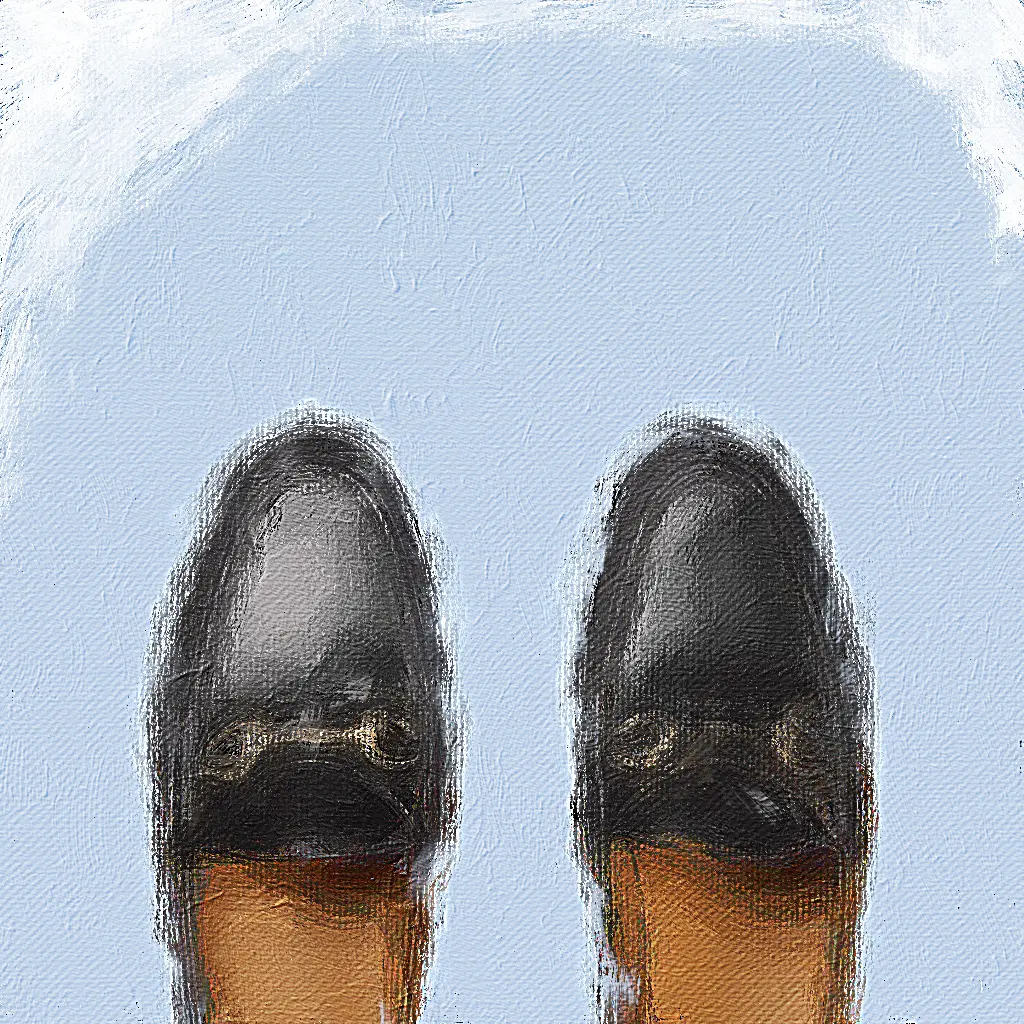
A loafer with a strap across the vamp containing a small shaped opening.
A penny loafer is a loafer with a short strap stitched across the vamp, cut with an opening. Crockett & Jones lists the penny, a short strap stitched with a cut-out, among its loafer variations, beside the saddle loafer, whose longer strap also has a cut-out. Cheaney describes the early G.H. Bass “Weejuns”, introduced in 1934, as having a leather strap stitched across the vamp with a diamond-shaped cutout, at first purely a design feature.
The strap fastens nothing: the shoe is a slip-on, and Cheaney counts straps among the decorative elements attached to a loafer’s vamp. That separates it from a monk strap, whose strap and buckle close the shoe. Cheaney traces the name to American students of the 1950s who slipped a penny into the slot on the strap; the practice made “penny loafer” the generic name for the style.
In job listings
Penny loafer is seldom named in listings. The strap is a separate piece stitched to the vamp, so the term is concrete for upper stitchers, prototype assemblers and mock-up technicians in a house’s shoe workshop, and for the product teams that develop a loafer line. See current shoe roles.