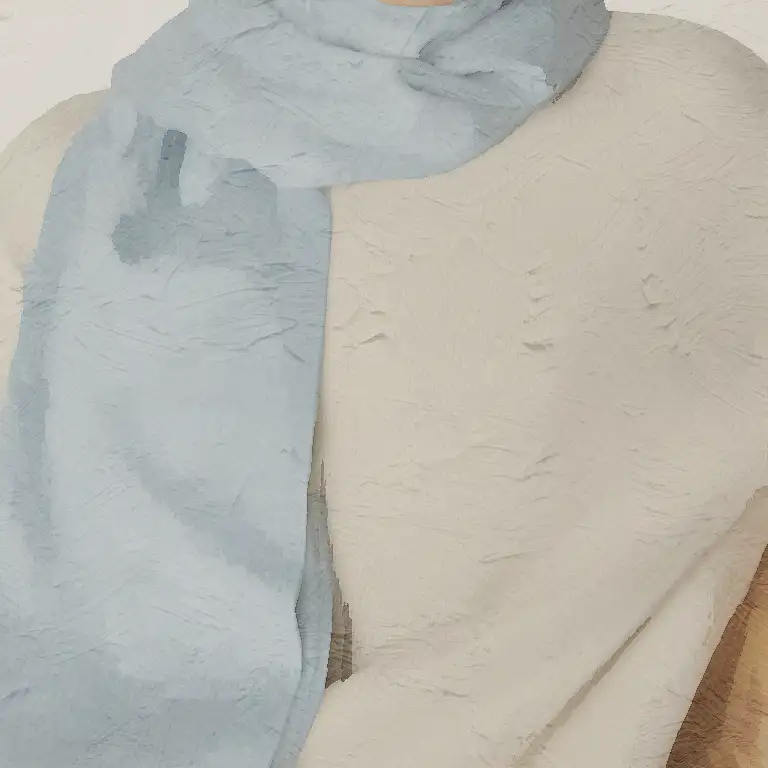
A woven fabric with prominent, closely spaced ribs running across its width.
Ottoman is a heavy corded cloth. Brentano’s textile glossary describes it in silk or a manufactured fiber, its ribs formed by filling yarns, usually cotton or wool, that the warp covers completely, so only the warp shows on the face. Faille works on the same principle, heavier yarns in the filling, but its ribs are light and flat; ottoman’s are larger and rounder. It appears in tailoring: the V&A holds a 1991–92 skirt suit by Anouska Hempel in black wool ottoman.
The name catches newcomers twice. In furniture, an ottoman is a padded footstool, such as the one Eero Saarinen designed to go with his Womb chair. In a museum catalog, an Ottoman silk may be one woven in the Ottoman Empire, such as a 16th-century lampas silk from Turkey at the V&A, and not ottoman cloth at all.
In job listings
The word is rare in current listings. Rib weaves such as ottoman are made in weaving mills, where operators prepare and load looms and repair breaks in the cloth, and developed by designers who choose materials with mills for menswear and accessories. See current weaving roles.