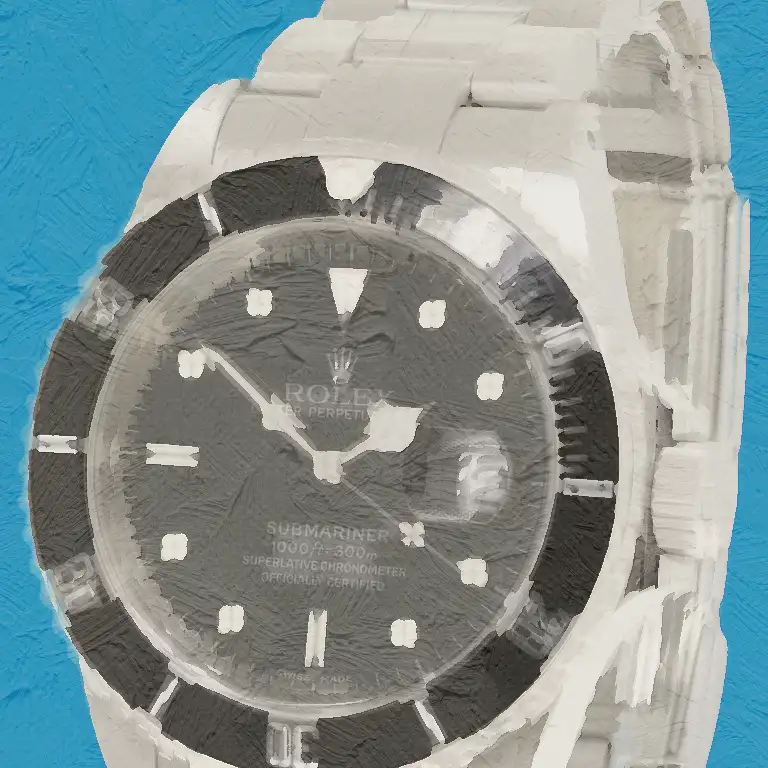
A watch powered by a wound spring rather than a battery, its rate set by an oscillating balance wheel and balance spring.
A mechanical watch stores its energy in the mainspring, a long steel blade coiled inside the barrel. As the spring unwinds, a train of wheels carries the energy to the escapement, which releases it in steps, five to ten times a second, to the balance and balance spring. Their oscillation, generally between 2.5 and 5 Hz, sets the rate. A basic movement, or caliber, without complications can have more than 200 components, and its power reserve depends on the length of the mainspring.
Mechanical does not mean hand-wound. On a manual-wind watch, turning the crown winds the mainspring; on an automatic watch, a rotor winds it as the wrist moves. Both are mechanical. A quartz watch is not: it runs on a battery and, with very few exceptions, keeps better time. Because oils and greases deteriorate over a few years, running or not, a mechanical watch generally needs a service about every five years.
In job listings
Mechanical appears in movement engineering and design titles, in production and regulation roles on mechanical and electronic movements, and in service-center watchmaker listings covering mechanical and quartz watches. It signals work on the movement itself. See current mechanical watch roles.