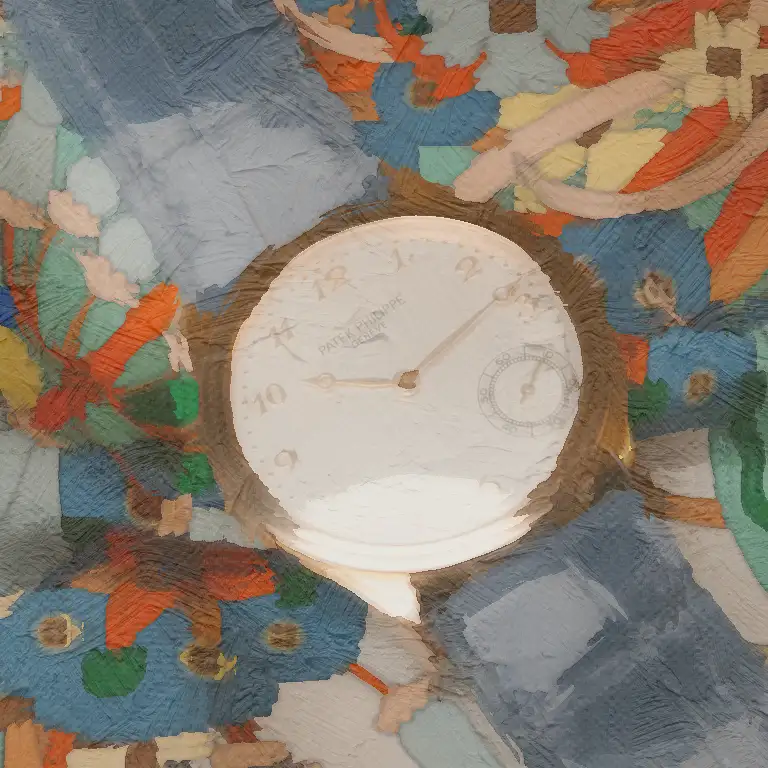
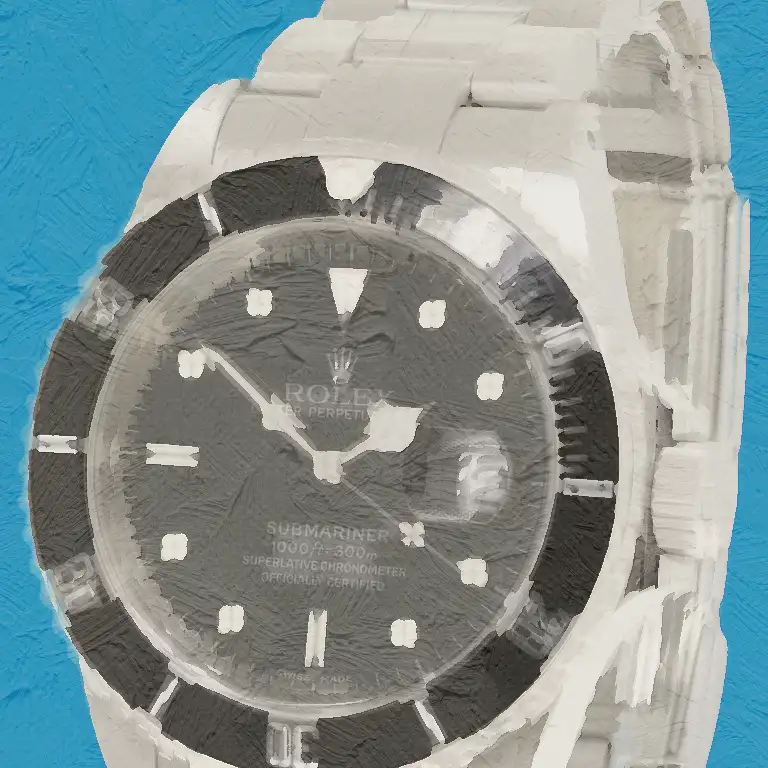
A decorative pattern of repeated engraved lines, traditionally cut into metal with a hand-operated engine-turning machine.
Guilloché is a pattern of fine, regular grooves cut into metal by a graver on a hand-operated machine. On the straight-line engine, a cam sets the amplitude and frequency of the lines, for patterns such as clous de Paris, waves and basket weave. On the rose engine, the part turns on an arbor while a feeler follows cams called rosettes, whose bumps move the arbor sideways to produce curved patterns; the craftsperson turns the machine with one hand and controls the graver’s pressure with the other. Unlike milling, the graver stays fixed and the part moves. Silver and gold are preferred, and mother-of-pearl can also be cut.
Similar patterns can be milled on a CNC machine or stamped with a die at lower cost. Horopedia calls the term guilloché incorrect for either, since neither reproduces the brightness of a groove cut by a graver.
In job listings
Hand guilloché belongs to dial-making and decoration workshops and to métiers d’art ateliers, where a guillocheur works the machines on dials, cases and movement parts. It is rarely a job title; nearby production roles are posted as dial decorator or dial finisher. See current dial decorator roles.