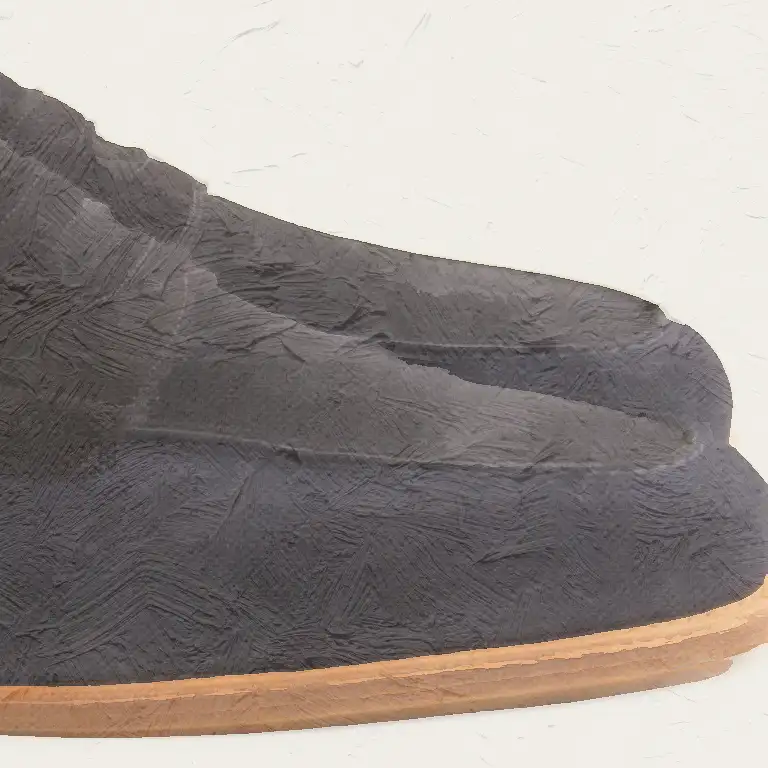
A shoe construction in which a welt joins the upper to the insole assembly and is separately stitched to the outsole.
In a Goodyear-welted shoe the upper is joined to the sole by two separate seams. After lasting, a strip of leather called the welt is stitched through the upper and lining to a rib on the insole; Cheaney describes a canvas rib, the gemming. The cavity inside the welt is filled with cork, a shank goes in beneath the insole, and the outsole is then stitched to the welt alone.
Because the outsole seam does not pass through the insole, it can be cut and a new sole fitted without damaging the upper. Crockett & Jones repairs its shoes on the last they were made on, and can usually repair a well-cared-for pair three or four times. Carmina notes that the extra layers make a welted shoe more water-resistant than a Blake-stitched one but slightly less flexible; Cheaney adds that it is water-resistant, not waterproof. Meermin warns that the sole may be stiff at first.
In job listings
The term appears mainly in the house descriptions of listings at welted-shoe makers, from client advisor to in-store artisan roles, as product knowledge. In-store artisans handle its after-sales side: resoling under warranty, heel replacement and insole replacement. See current shoemaker roles.