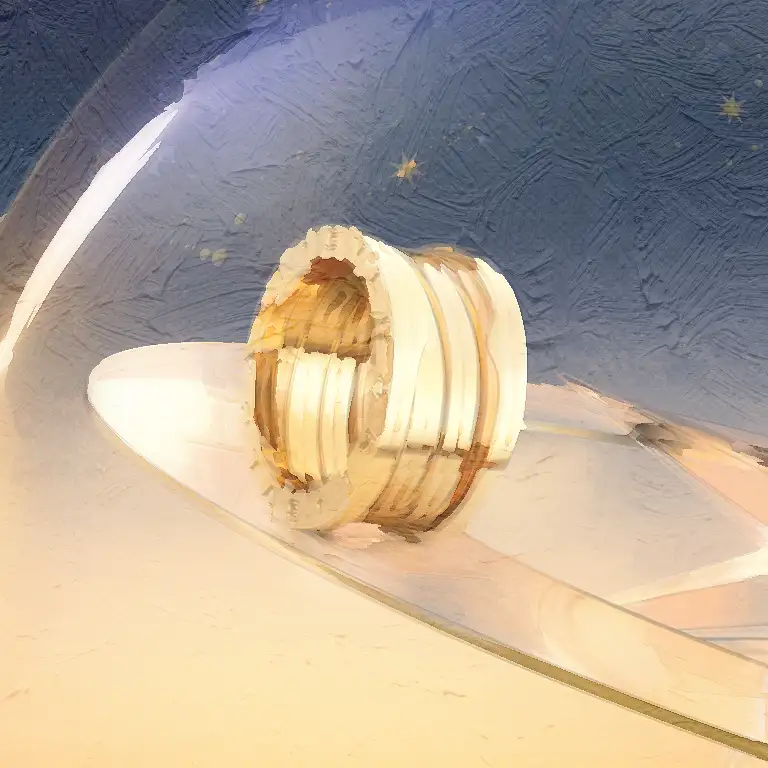
Metalwork made of fine gold or silver wire, twisted or coiled into patterns and soldered, usually as openwork.
Filigree begins with the wire. Writing for the Goldsmiths’ Centre, the jeweler Filipa Oliveira describes drawing precious-metal wire down to 0.25 millimeters, twisting it, then flattening and heating it in turn, and joining the work with a torch and a special filigree solder. A V&A display of a 19th-century German silver button shows the order of work: a framework of plain wire forms two rosettes, which are filled with twisted and coiled wire and 63 granules.
The granules explain the name. The CNRTL traces the French filigrane to the Italian filigrana, from fili, threads, and grana, grain, because the threads were first garnished with small grains. Its TLFi defines filigree as openwork of gold or silver wires, interlaced and lightly soldered; the Académie française’s dictionary, given alongside it, describes metal wires soldered onto a piece of the same metal. By analogy, the word also describes anything that looks finely openworked.
In job listings
Filigree is rare in listings. It has appeared among the bench skills required of a goldsmith, with hand engraving, soldering and precision finishing. Oliveira notes that the technique does not suit mass production, so a listing that names it describes handwork at the bench. See current goldsmith roles.