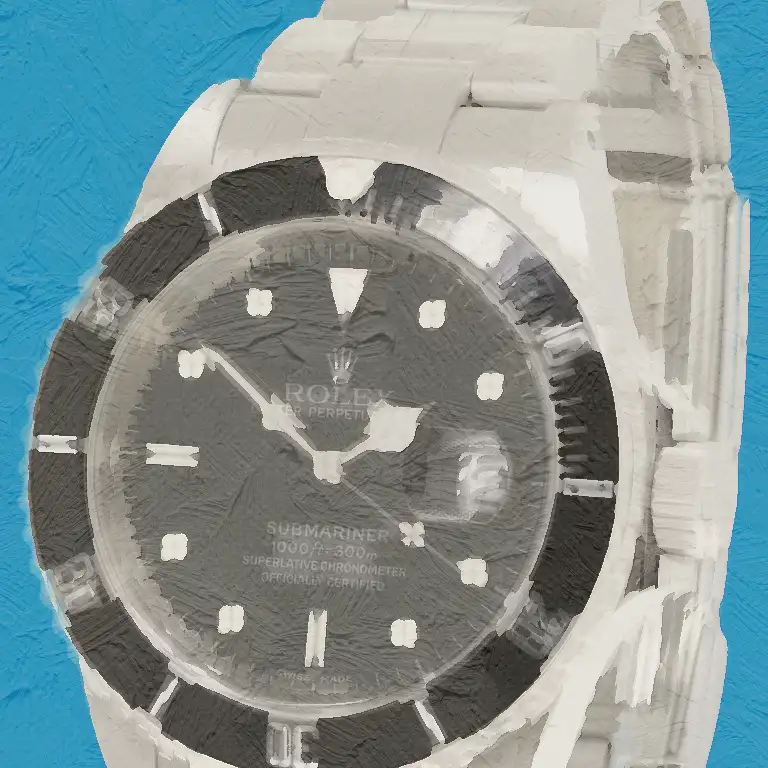
A decorative finish of regular bands applied with an abrasive tool to watch movement surfaces, often plates and bridges.
Côtes de Genève, or Geneva stripes, are bands of fine, parallel or concentric lines on the flat, visible surfaces of a movement: mainly bridges, sometimes plates. A circular abrasive is pressed onto the surface and moved across it in a straight line. Its diameter sets the curve of each line, and the spacing between passes sets the width of the stripes, which slightly overlap. Abrasive papers, lapping pastes or diamond tools are used, on a simple lathe, a dedicated machine, or in the machining center that makes the part.
The stripes first removed irregularities left by manufacturing; today they are decoration and a traditional sign of careful finishing. The name refers to Geneva, where the motif appeared in the early 19th century; it describes a pattern, not where a movement was made. Recessed surfaces, where stripes cannot be applied, take perlage instead.
In job listings
Côtes de Genève are applied in movement finishing and decoration workshops, by hand on a lathe or by setting up a machine, then checked in quality control. The Fondation Haute Horlogerie lists them among the techniques of the watch finisher. Production roles that involve them are usually posted as decorator or finisher. See current decorator roles.