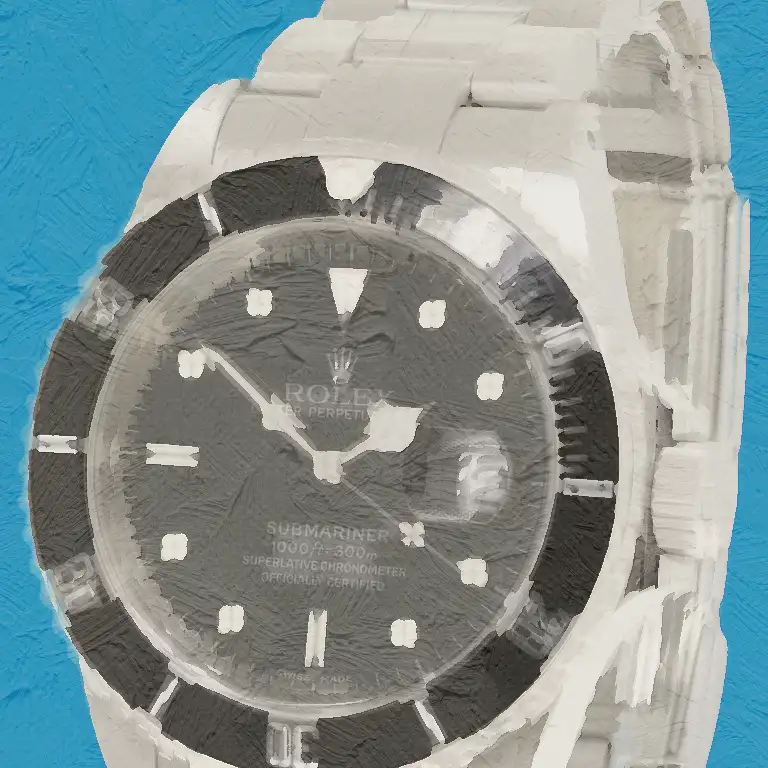
A mechanical watch, with no battery, whose mainspring is wound by a weighted rotor that turns as the wearer moves.
Automatic, or self-winding, describes how a mechanical watch is wound, not what powers it: the energy still comes from the mainspring. The rotor, a half-disc with a segment of heavy metal at its rim, pivots freely. As the wearer moves, gravity draws it down, and a pinion on its axis drives the self-winding mechanism, which winds the mainspring. A rotor generally pivots at the center and covers the movement, which makes it thicker; a micro-rotor, small and off-center, sits in a space cleared within the movement instead.
Automatic is not quartz. An automatic watch has no battery; a quartz watch runs on one. On the wrist, the rotor keeps rewinding the barrel. Off it, the watch runs on its power reserve, commonly 40 to 80 hours, then stops for lack of energy.
In job listings
Automatic and self-winding appear in watchmaker and after-sales service roles, where an overhaul includes checking how well the winding system works: ratchet wheels that no longer work effectively can stop a watch winding properly. In boutiques, preparing display watches by setting and winding them can be part of a sales role. See current automatic watch roles.