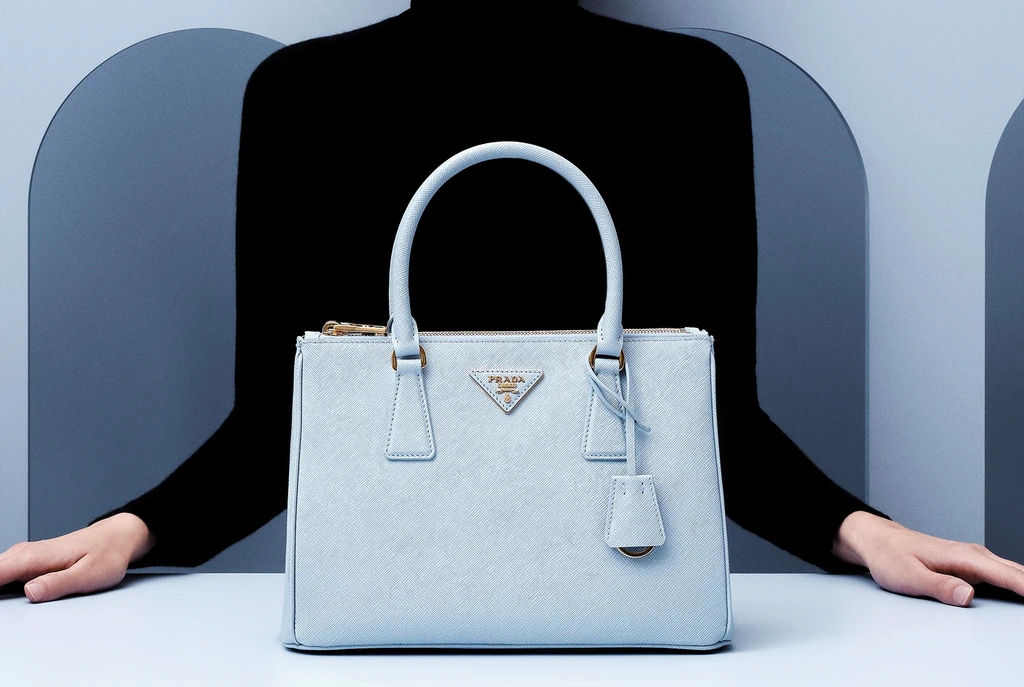
The Galleria seems to enjoy having everything arranged. In Prada’s photograph the handles describe two arcs, one behind the other. The triangle sits squarely between their attachments. Even the little leather key ring has somewhere to hang. I like that air of composure, especially in a bag whose owner may be running for a train with very little idea where the ticket is.
A shop before a bag
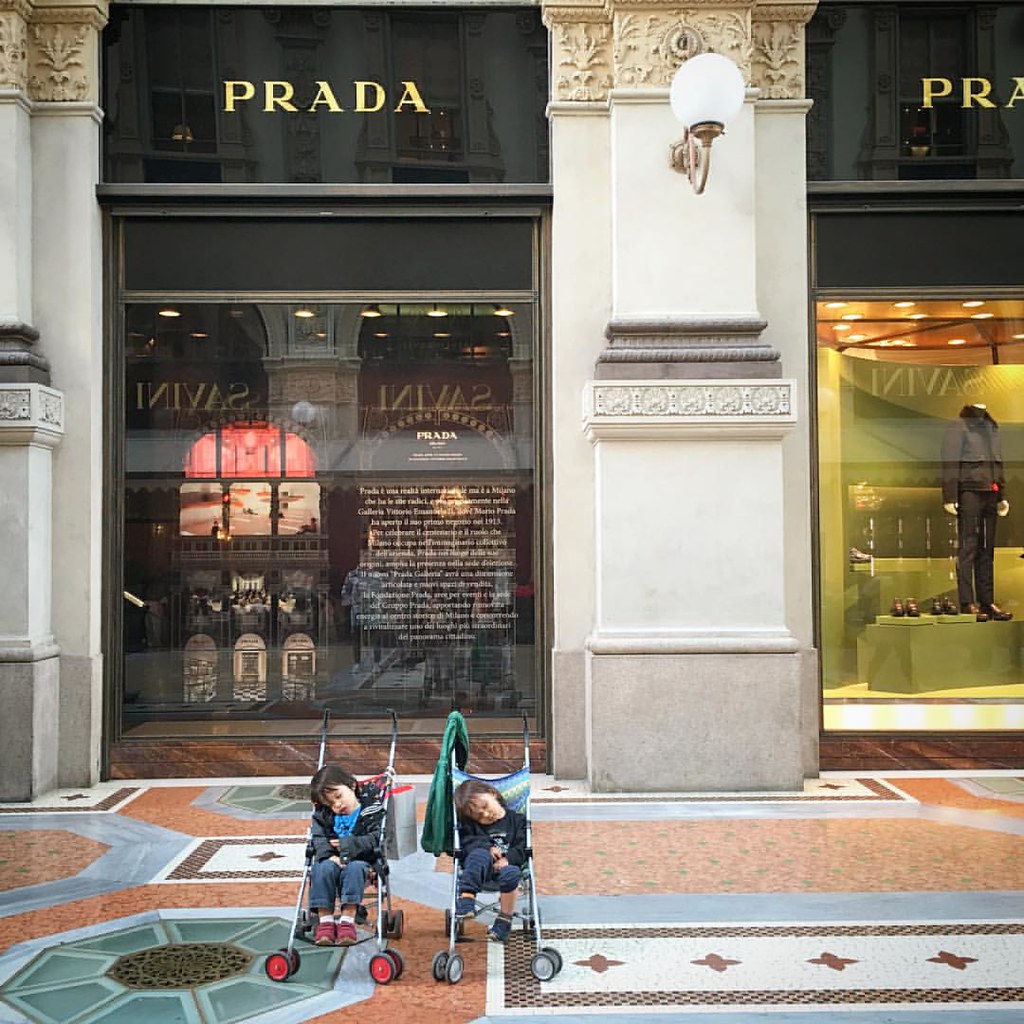
Look past the name above the door in Lian Chang’s photograph. The stone columns belong to the shopping arcade, while the smaller display windows belong to the shop. In 1913 Mario Prada opened his first store in the Galleria Vittorio Emanuele II in Milan. The Galleria bag arrived in 2007 and borrowed the address. The two dates belong to different things. You could have known the shop for a lifetime before there was a Galleria to carry out of it.
The bag looks simple partly because so much of the work happens along thin lines. Prada’s account of the Galleria’s manufacture counts 83 pieces. It describes the exposed edges being smoothed and painted by hand. Look around the base of a handle, where one piece of leather lies on top of another. The edge of the upper piece stays in view. That narrow strip has to look finished along its whole length, including the bend.
Where the ticket goes
For a specific example, take Prada’s large Saffiano Galleria. Its crosshatched calfskin has a fine pattern of its own. The snaps at the sides control the opening. Zipped compartments sit along the outside edges, and there are pockets in the lining as well. A ticket slipped into an outer compartment can be retrieved without searching the whole interior. The discipline only works if its owner can remember which side.
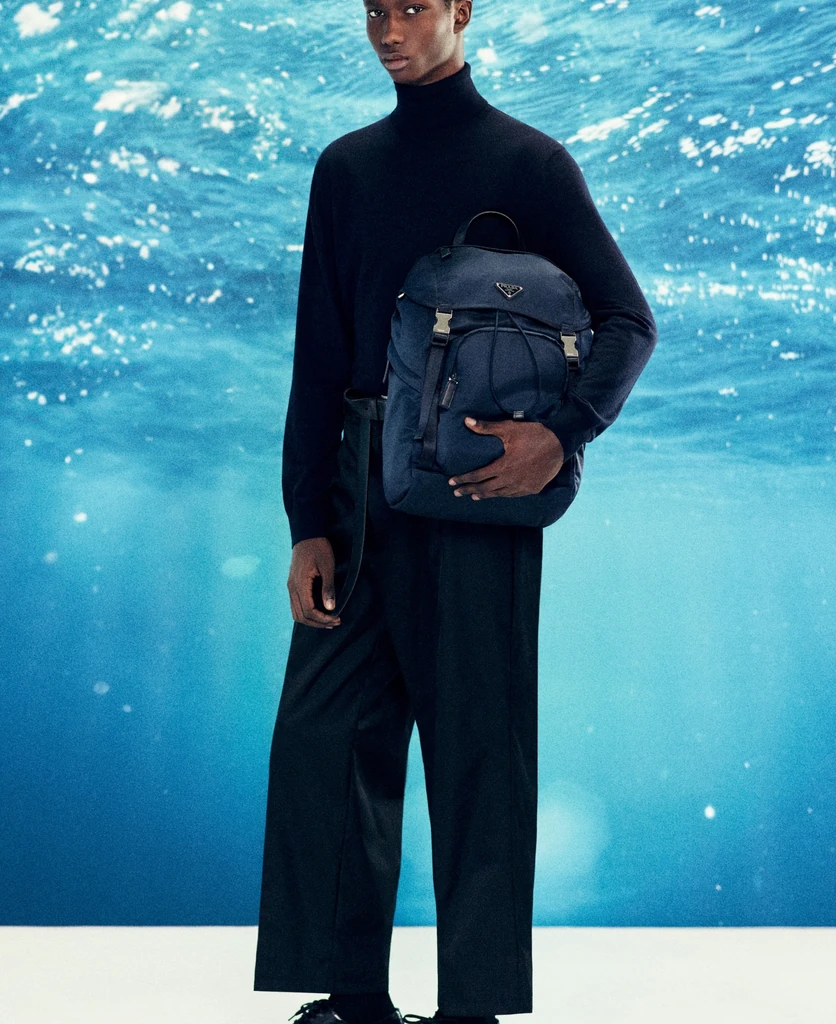
There’s a family resemblance to the Prada nylon backpack, although the two bags put their pockets in quite different places. On the backpack, a pocket projects from the front and helps make the outline. On the Galleria, the long zippers do their work within the outline. That difference is visible even before the triangle comes into focus.
For a leather-goods advisor, opening the bag is a more interesting demonstration than reciting the number of parts. Hand it over. See where the owner puts the ticket. The design has endured because it offers a little order without insisting that everyone keep things in the same place.