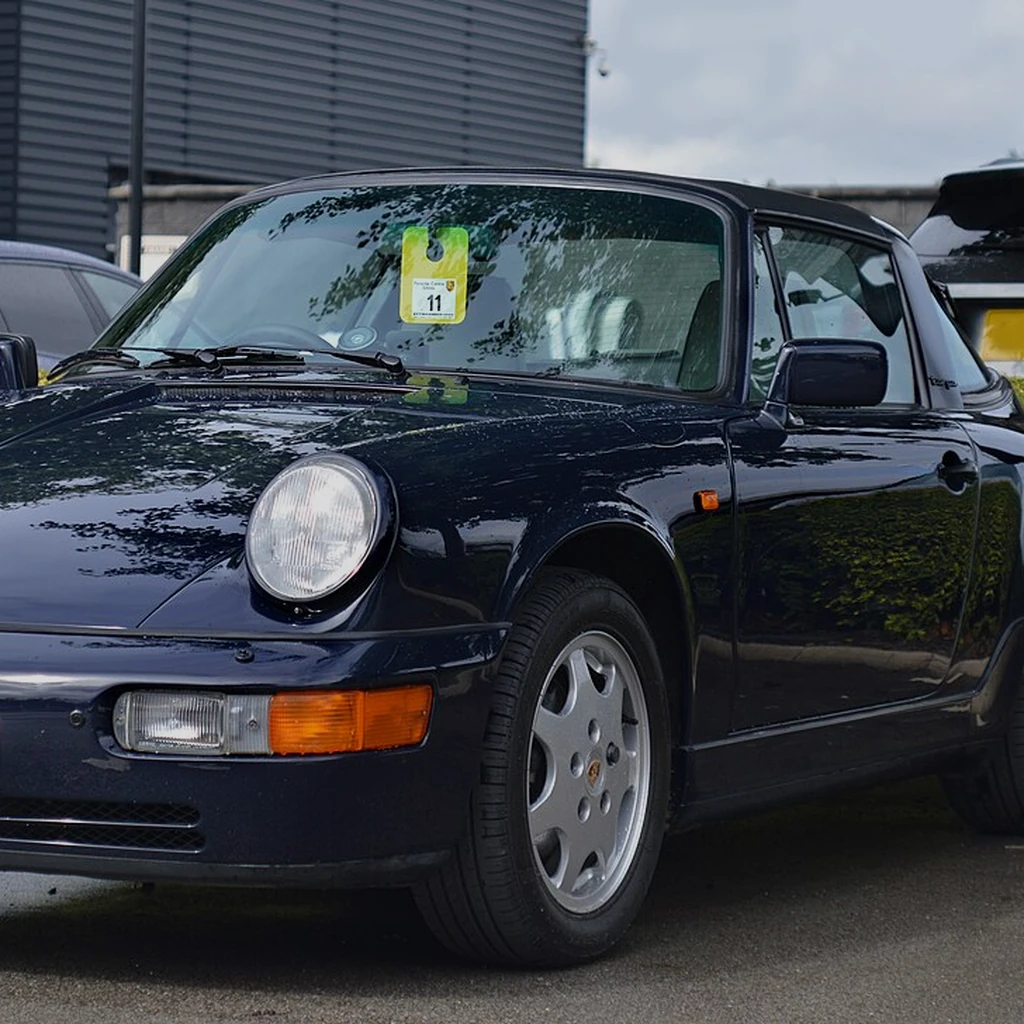

The 911 is recognizable before it is identifiable. A glance gives us the family; a closer look is needed for the generation, body and particular version. That is the foundation of my selection. The silhouette carries continuity through cars that can be quite different things to own and drive; the design has room to develop without becoming anonymous. Few ideas in this collection make the difference between identity and specification so easy to see.
A name changed early
Porsche presented the 901 at the Frankfurt motor show in 1963 as the successor to the 356. The account of its origins describes the rear-engine layout and the change to 911 in 1964 following Peugeot’s objection to the numerical designation.
The name was revised almost immediately. The broad visual idea proved harder to dislodge. Successive cars retained a family resemblance while acquiring different engineering, controls and equipment.
The Leica M and Rolex Submariner invite the same distinction. “Unchanged” is a rather poor compliment. A design can endure because it accommodates development. The Pinarello Dogma F brings that question into focus on two wheels: which changes serve performance, and which features carry the identity? Early air-cooled cars and later generations belong to a lineage, not to one technical specification repeated indefinitely.
Which 911?
Porsche’s model directory separates Carrera, Targa, Turbo and GT variants, with further distinctions within those groups. The car in the photograph is an earlier Cabriolet. Its familiar headlamp and wing establish the visual connection; they cannot tell us every option or characteristic of the car.
A sales specialist has to turn recognition into a useful set of choices. An open roof, a particular transmission, everyday use or occasional driving may matter more to the buyer than the comparison that first interested the specialist. The generation, model year and individual build record give those choices substance.
Published performance figures belong to a named model and its test conditions. An evocative badge is no reason to detach a number from the car that produced it.
The ordinary questions belong here, too
A driving position, space for luggage, parking and the controls used every day are not interruptions to the interesting part of a consultation. They are part of finding out how a car will inhabit someone’s life.
The appointment should leave time to sit, adjust and ask. A properly arranged test drive helps the person assess the actual vehicle within the law and the retailer’s procedures. The competition history can remain a subject for conversation; it does not have to become a demonstration.
With a previously owned car, inspection and service documentation need a clear explanation. Unresolved technical questions belong with the workshop; after-sales service is part of the ownership experience, not an appendix to the sale. The handover then brings together the records, operating guidance and people the owner can contact afterward.
The outline may have prompted the first visit. What follows asks for a more individual kind of attention. A car recognized by almost everyone still has to become the right car for one person.