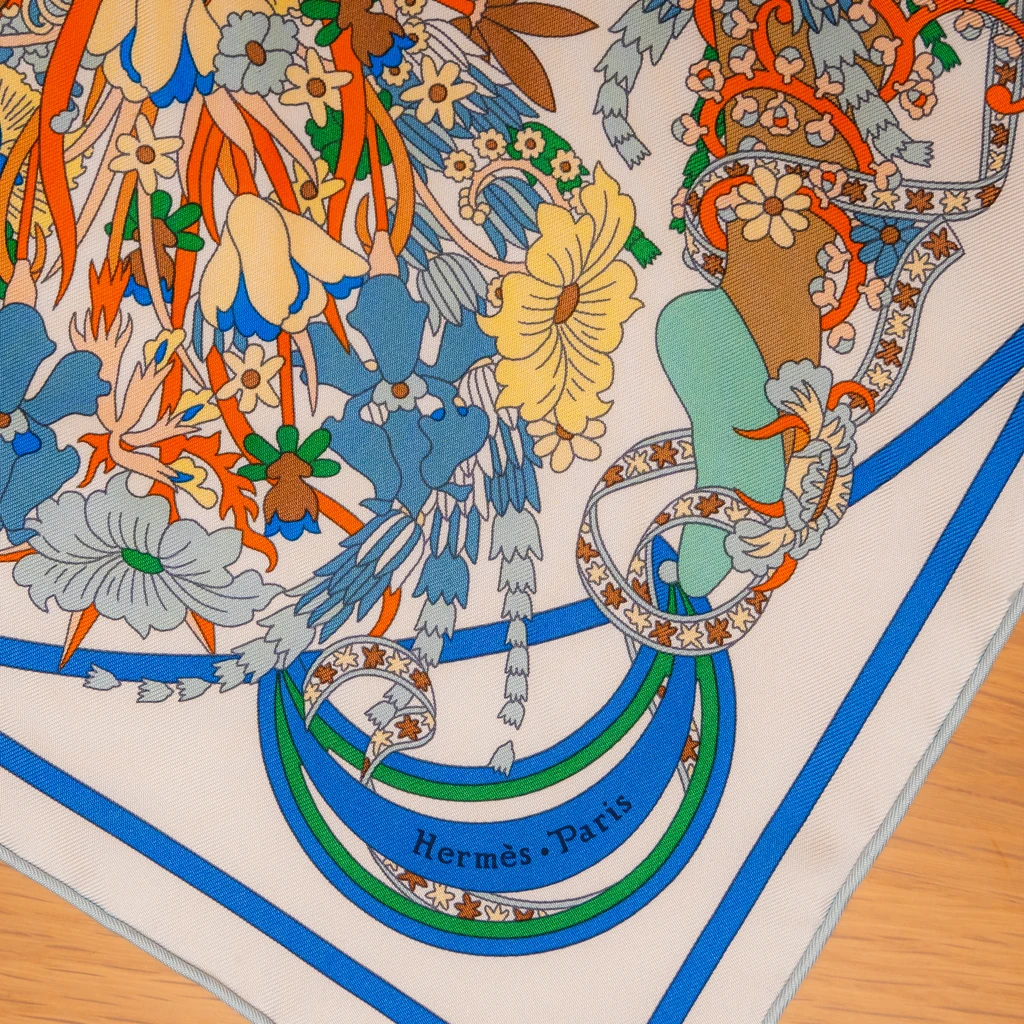
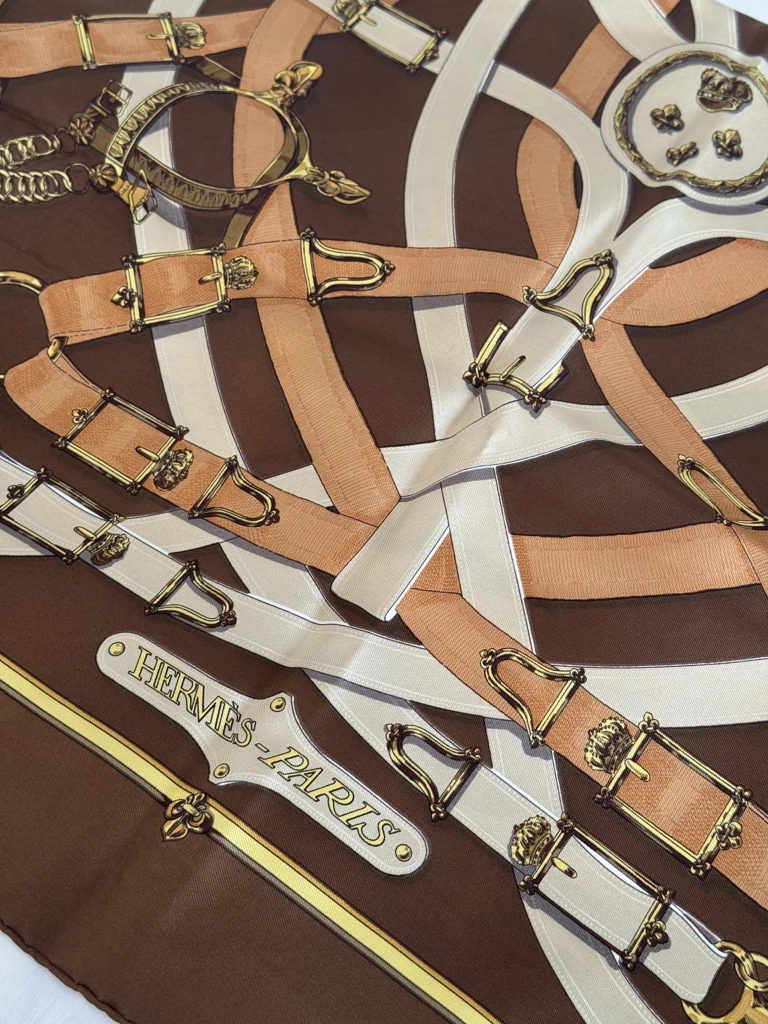
An Hermès scarf is a drawing that refuses to stay flat. Spread out on a counter, it invites inspection: horses, harnesses, borders, little incidents scattered across the silk. Fold it, and much of that elaborate work disappears. A corner or a strip of color takes over. I find this one of its more appealing contradictions. You buy the whole picture, then decide which part to wear. Its place in this collection rests on that collaboration: a simple square gives both illustrator and wearer room to compose. The design remains unmistakably considered even when the person folding it supplies the final composition.
A square with a point of view
Hermès dates its first silk scarf to 1937. Robert Dumas created Jeu des omnibus et dames blanches, bringing illustration into a house already fluent in the language of horses and their equipment. The history of six generations of artisans places the scarf among the métiers that grew beyond the original equestrian work.
In my photographs, ribbons and flowers crowd together inside a blue border. The detail rewards a close look, but the border gives the eye somewhere to rest. Fold the scarf, and that balance changes again.
The Acquired conversation about Hermès is an absorbing companion to this story. It gives the scarf a place within the larger question of how a house grows while remaining recognizable. The answer is easier to appreciate when there is an actual object in front of us.
The edge of the drawing
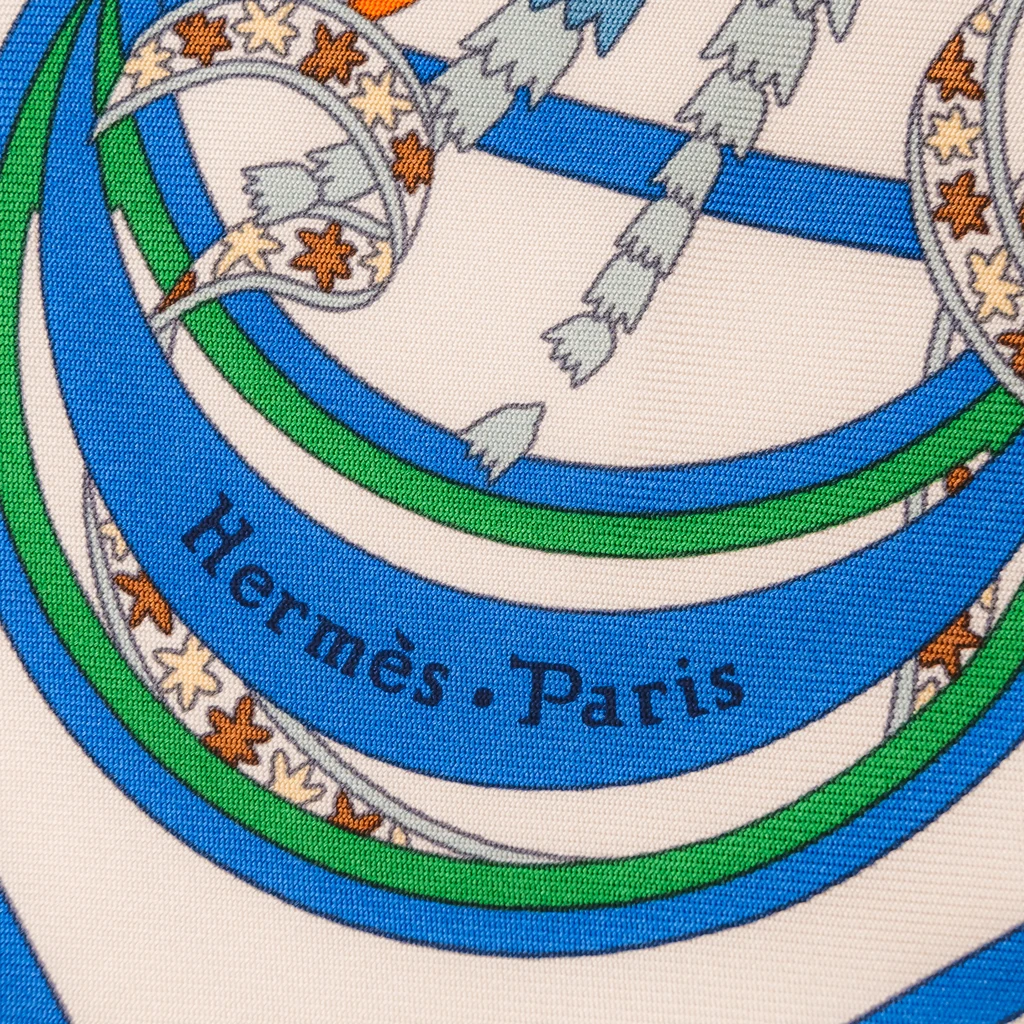
Take a silk twill carré 90. The diagonal weave and rounded, hand-rolled edge give the printed image a physical character that a screen cannot quite supply. Hermès’s Brides de Gala au Fil de Soie, for example, is made in France from silk twill with hand-rolled edges. Even its dimensions allow for the small variations of that handwork.
As with Loro Piana’s fabrics, the material has a story beyond its first impression. Those details belong to that format and product; they are not a specification for every scarf bearing the name. Size, fabric and finish change how an illustration behaves. A border that feels generous across a large square can become the whole event in a narrow fold.
The mirror gets a vote
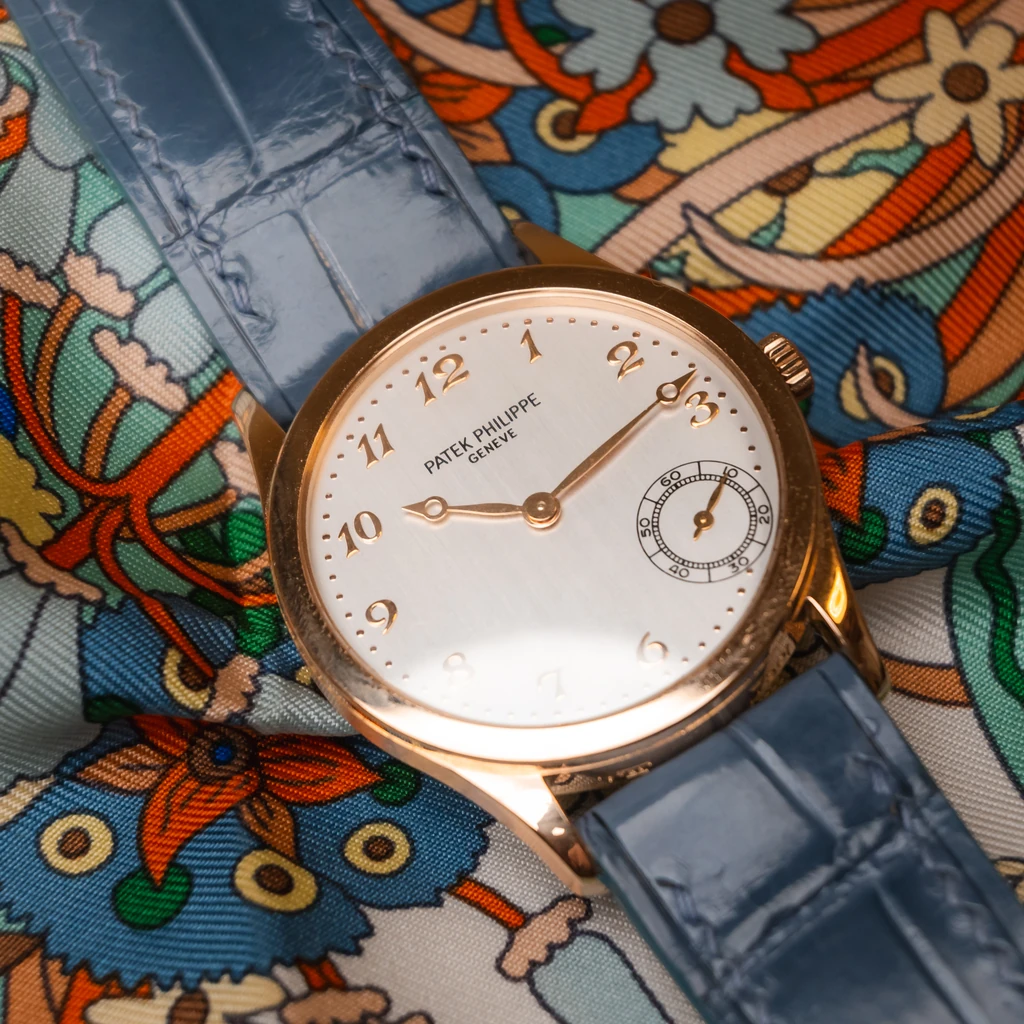
A scarf really needs two viewings: open, then worn. Someone who dislikes the center of a design may love the small piece of it that survives around the neck. Two colorways folded identically can make the decision surprisingly clear.
This gives a sales advisor something more interesting to do than recite a design story. Open the square, find the border, try a fold, and let the wearer look. One knot they can repeat at home is worth more than a performance they cannot remember.
Care deserves the same attention. For the silk twill example, the house advises avoiding water and chemicals, storing it flat and untied, and using a professional dry cleaner. The right instructions travel with the particular scarf.
Illustration, textile knowledge and the ease of a small demonstration meet in this object. For anyone exploring work at Hermès, it is a good reminder that knowing a product includes knowing how to make it useful to another person.