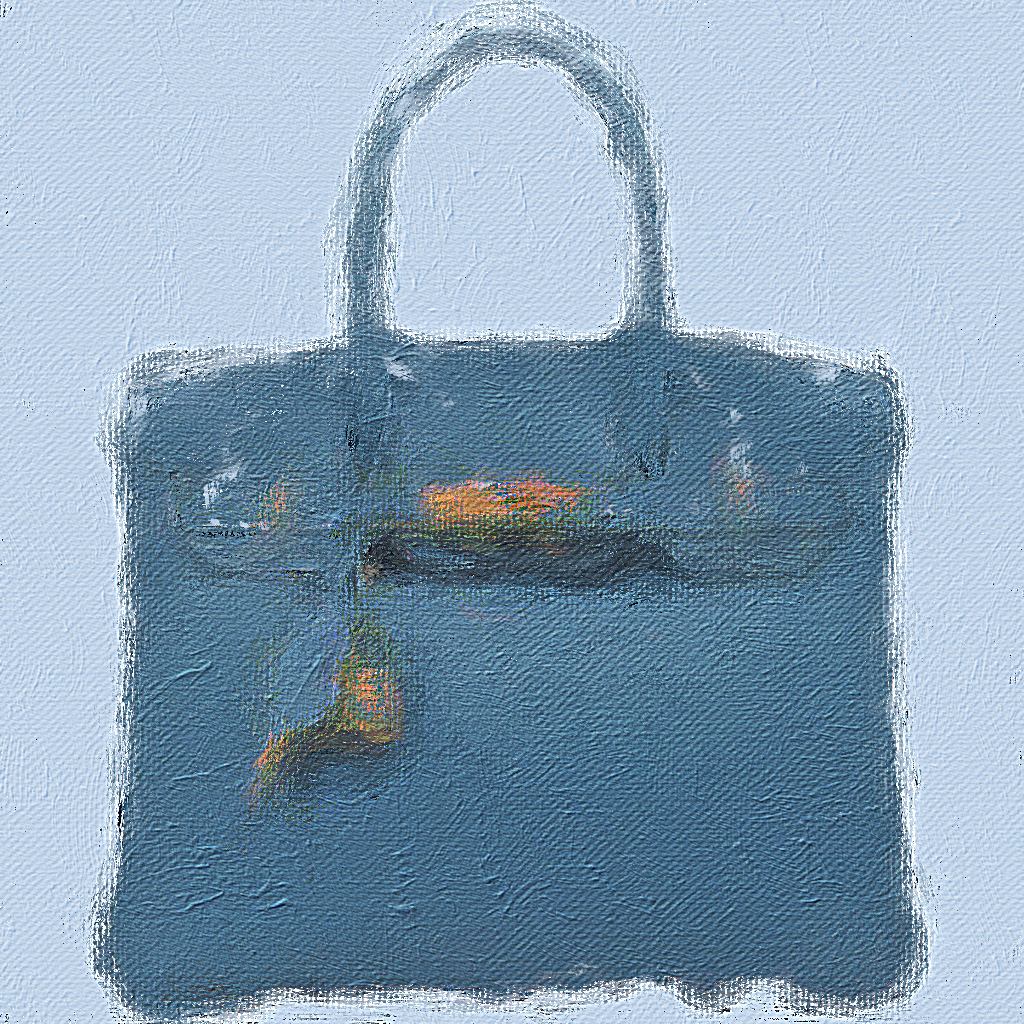
For a bag so thoroughly surrounded by talk of status, the Birkin has an agreeably practical beginning. Jane Birkin needed somewhere to put her things. That practical origin is central to my choice. The Birkin has become a shorthand for luxury, yet its identity still resides in a legible arrangement of handles, flap and fastening. I want it in this collection because the actual object remains worth discussing after all the talk of status has been set aside.
The Hermès silk scarf gives its wearer a picture to rearrange; the Birkin gives a day’s possessions somewhere to go. Both make more sense in use than at a distance.
A conversation in the air
In Hermès’s account, Birkin found herself seated beside Jean-Louis Dumas on a flight from Paris to London in 1984. She described the difficulty of finding a bag suited to her needs as a young mother. The conversation led to the bag that bears her name.
It is a compelling origin because a person and a problem remain visible inside it. The bag has acquired a great deal of cultural weight since then, but the handles, flap, straps and turnlock still have to serve someone using them.
Open it and close it. Consider what that entails with things in your hands. The most famous detail about an object is not necessarily the detail that will matter most to its owner on a Tuesday.
A family of particulars
“Birkin” is the beginning of a description. Size, leather, color and hardware make it more complete. The same color behaves differently across surfaces, while changes in scale alter both the appearance and the practical proposition.
A softening leather and one that holds its shape do not invite exactly the same expectations. A previously owned example adds condition and history to the discussion. Each bag deserves the description that belongs to it, rather than a general account of what Birkins are supposed to be like.
That is part of the pleasure of looking closely. Familiarity with a name can otherwise persuade us that we have already seen the thing.
Back to what it carries
For a client, capacity and weight deserve as much attention as the view in the mirror. The handle drop needs to work with the clothes they wear. The shoulder chain of the Chanel 2.55 makes a useful comparison: how a bag is carried changes what it asks of its owner. The contents need to fit without distorting the shape. Occasional use and an entire working day ask different things of a bag.
A client advisor can bring the conversation back to these questions without making it less enjoyable. Jane Birkin’s original problem supplies a rather good precedent.
Availability calls for a different kind of clarity. Stock, the boutique’s process and any agreed follow-up should be described as they are. Promises about a future offer or resale value add uncertainty to a conversation that already has enough of it.
The working life behind this object includes leather craftsmanship, presenting it and caring for it afterward. Hermès roles span those disciplines. Across them, there is something worth keeping from the origin story: attention to the person who will use the bag.