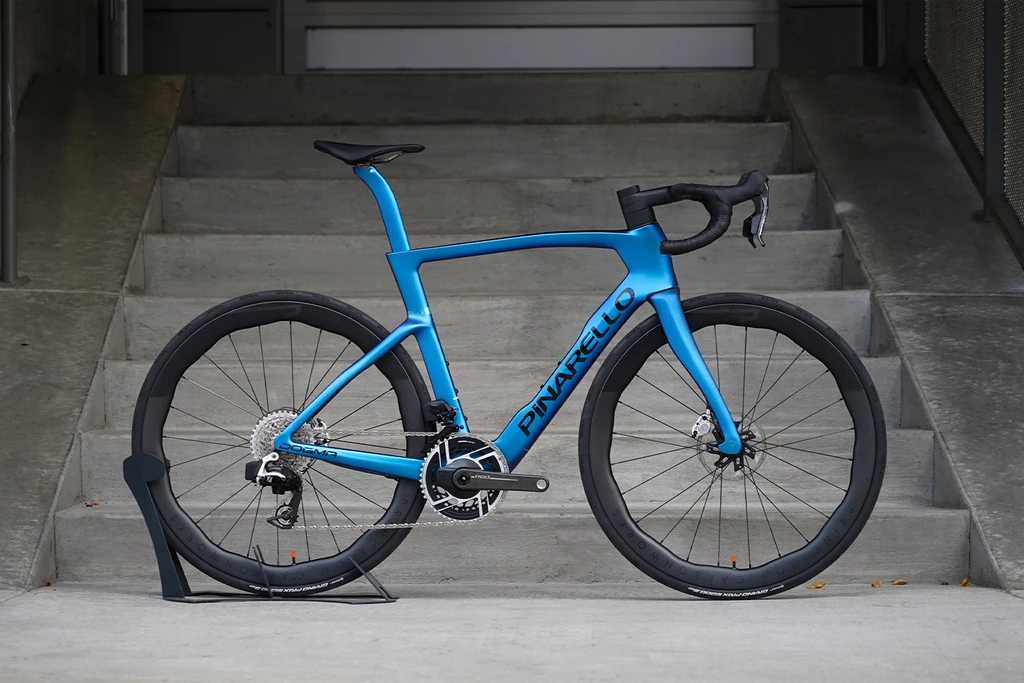
A racing bicycle makes its priorities unusually visible. There is little room to hide a decision about shape, weight or riding position. That concentration makes the Pinarello Dogma F a compelling contender. It carries the Dogma identity into a recognizable form shaped by competing demands, with the rider completing the design. The Dogma family has a clear engineering character. Whether this particular expression will acquire the enduring recognition of the older designs in The Icons of Luxury is the question I want to leave open.
Several problems at once
Pinarello’s June 2021 introduction of the Dogma F described a balance among aerodynamics, weight, geometry and frame construction. Climbing and aerodynamic considerations were brought into one road-racing design.
“Balance” can be a conveniently vague word in a product description. Here it points to competing demands. As with the Porsche 911, the interesting question is what the designers have reconciled, and what character survives each revision. The largest performance claim in the brochure rarely answers either.
Any published comparison still needs its conditions: the generation tested, the configuration and the method. A number without those companions can sound precise while telling us surprisingly little.
One name, different bicycles
The newer Dogma F specification describes M40X carbon and revisions to the frame and fork. That does not make those features part of every earlier Dogma F. The name has continued while the object has developed.
The pictured bicycle adds another layer: a blue frame assembled with SRAM Red and Black Inc wheels. A frameset and a complete bicycle are different offers. Groupset, wheels, cockpit and the other components help determine what the finished machine is like to use and maintain.
Even weight needs a complete sentence. Which frame size? Which parts? What, exactly, was put on the scale? These are sensible questions rather than attempts to spoil the enjoyment.
A rider belongs in the specification
The rider’s position is the part a display cannot supply. Current equipment, usual distances, terrain and any existing professional fit give a specialist somewhere to begin. Height alone is a rather thin account of the person who will spend hours on the bicycle.
Adjustment matters before an order is placed. A cockpit has implications for reach, width and the work involved in changing either. A qualified fitter or mechanic can explain what is possible while there is still time to choose it.
This is where technical retail becomes particularly demanding. The ability to recite specifications must connect to the judgment to involve the right colleague. Safety-critical setup belongs with trained technicians following the correct instructions.
The handover should bring the agreed build, workshop preparation and service arrangements together. After all the discussion of design and performance, the bicycle has to meet one rider, on an actual road. That is a much more specific brief than being impressive on a wall.